
Advertisement — The Niftiest may earn a commission if you purchase through links in this article.
Hair Starting to Thin? Read This Before Buying Another Shampoo.
A different bottle can change your shower routine. Understanding what’s happening to your hair could change your next move. Here’s where Keeps comes in.

You zoom in on a photo and notice more scalp than you expected.
Maybe it is the angle. Maybe you need a haircut. But you have caught yourself checking that same spot in the mirror, too.
Then comes the search. Thickening shampoo. Scalp serum. Vitamins. Another promising bottle, another set of before-and-after photos. Before long, you have plenty of products to compare, and still no clear answer about what your hair actually needs.
If that sounds familiar, pause before the next purchase.
The useful question is bigger than which bottle looks convincing: what is causing the thinning, and is there a treatment that makes sense for you?
Keeps gives men a way to start that conversation online. Its assessment begins with the goal (preserve hair, regrow hair, or both), followed by a process for clinician review and prescription treatment if appropriate.2
For someone tired of guessing, that is a much more useful next move.
The part a thicker-looking hairstyle does not tell you
There is a difference between making hair look fuller and treating the reason it is thinning. A cosmetic thickening product can address appearance. That does not, by itself, establish that it treats male pattern hair loss.
In male pattern hair loss, a hormone called DHT contributes to the gradual shrinking of susceptible hair follicles. Over time, the hairs can become finer and less visible. That is one reason the treatment conversation goes beyond what happens in the shower.4
This does not mean every change in your hair is male pattern loss. It means the cause matters more than the most dramatic claim on the next label.
Getting that distinction right can give your next step a purpose: understand the problem, then consider a treatment selected for it.
Pay attention while you still have plenty of hair
You do not have to wait until a change is obvious to everyone else before asking about it.
The American Academy of Dermatology says men tend to see better results from FDA-approved treatments for male pattern hair loss when they start soon after noticing it. Treatment can reduce further loss, and some men experience regrowth.1
That guidance is about established treatments. It is not a guarantee of results, and it does not prove that a particular compounded formula will work for you.
But it gives you a good reason to replace “I’ll think about it later” with an assessment.
The goal does not have to be a dramatic transformation. It might be keeping a haircut you like. Preserving the appearance you recognize. Finding out whether the thinning you have noticed is something treatment could help.
You already know what made you take a second look. Now you can find out what options are worth considering.
Keeps turns the next step into an online process
You do not need to arrive knowing the name of a medicine.
Keeps’ linked treatment page presents compounded oral chews and topical drops, with clinician review to determine whether a prescription is appropriate. The page describes once-daily options and delivery, giving eligible patients a way to build treatment into an at-home routine.2
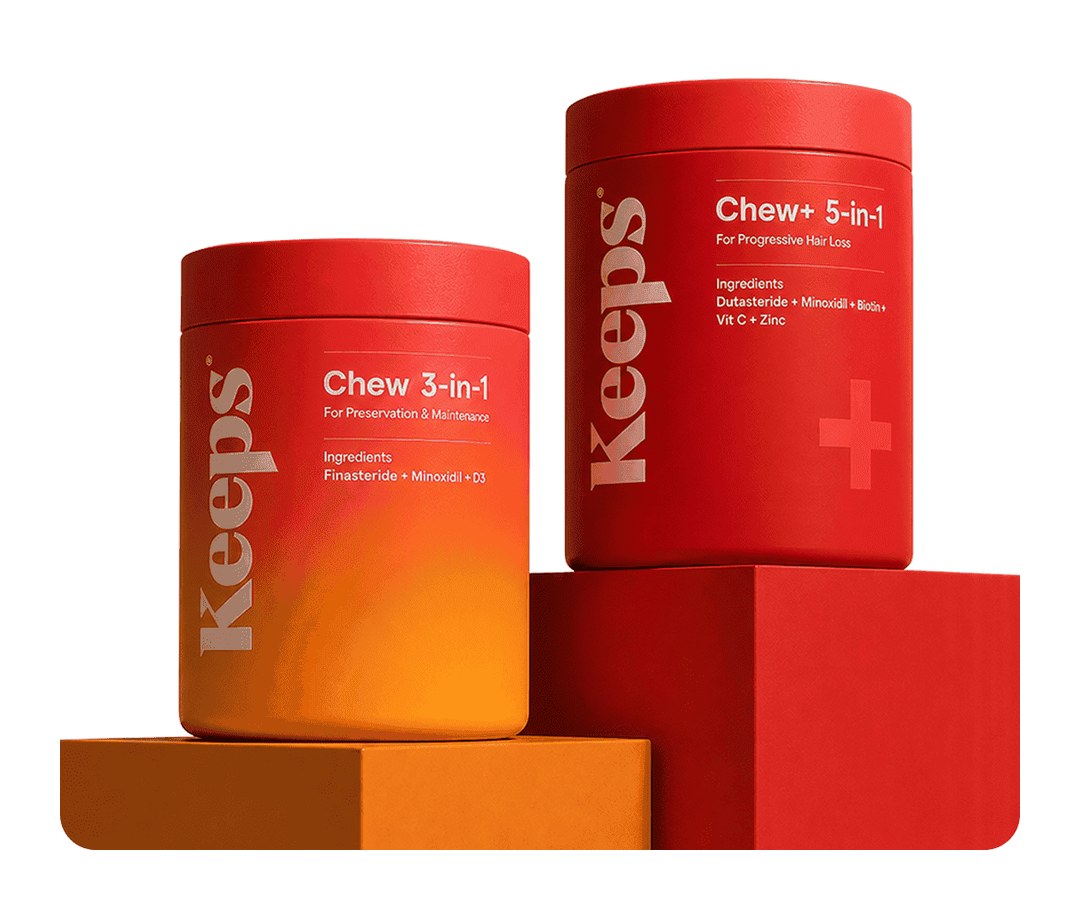

The attraction is straightforward: start with your hair goals, provide the information the service requests, and have a clinician assess the treatment decision. You can bring the questions you have been collecting along the way.
That is the reason to click through. See what Keeps offers, understand the process, and find out whether it fits the way you want to address thinning.
Start with the online assessment. Prescription treatment is subject to clinical eligibility. Paid link.
Make the goal something you actually care about
Imagine the outcome you would value: the same haircut still feeling like your haircut, less time trying to style around a concern, or a thinning area looking fuller.
Those are goals to discuss, not promises a brand can make to every man. They are also more useful than chasing somebody else’s most impressive photo.
Ask the clinician what is realistic for your type and stage of hair loss. Explain whether your priority is maintaining hair, pursuing regrowth, or both. Ask which proposed treatment fits that goal and why.
A clear answer gives you something another bottle cannot supply on its own: a reason for the routine.
A daily routine beats an overnight promise
Hair treatment takes patience. Established medicines are generally assessed over months, and continued use is needed to maintain their benefits. Your clinician should explain the expected timing for your particular plan.1

The practical question is whether you can follow that plan consistently. A once-daily option may be appealing, but the route and formulation still need to suit your health history and preferences.
You should know what you are taking or applying, what progress to watch for, and how to get advice if the response or side effects concern you.
That turns a hopeful purchase into an informed commitment. It also gives you a better way to judge progress than checking the mirror every morning and expecting a new head of hair.
Three things to know before choosing a plan
1. The treatment has to fit you.
Hair-loss medicines can cause side effects. Finasteride can cause sexual side effects, and reports associated with compounded topical finasteride include mood-related and other effects. Topical finasteride can be absorbed into the body and transfer to others; “topical” does not mean risk-free. Discuss the full risks and instructions for the specific treatment with the clinician.3
2. Know the continuing cost.
Review the actual checkout charge, renewal amount, refill schedule, any additional fees, and cancellation terms. If a guarantee is part of your decision, read its eligibility and documentation requirements. Decide based on the plan you would actually buy. Our longer Keeps review covers pricing, billing and cancellation in more detail.
3. Get the right kind of evaluation.
Sudden or patchy hair loss, scalp symptoms, or uncertainty about the cause deserve medical evaluation. An in-person examination may be needed. No online assessment guarantees a prescription, and no treatment works for everyone.
Once those questions are answered, you can make the decision on something more useful than a headline.
Review current plans and terms on Keeps. Paid link.
Give your next move a better reason
You could keep comparing products and hoping the next one makes the choice obvious.
Or you could take the question you already have (what can I do about this thinning?) into a process built to assess treatment options.
Keeps is worth a look if you want to start online. You bring the goal. A clinician evaluates whether a prescription plan is appropriate. You review what it involves before deciding.
If you have noticed a change, you have a reason to get an answer. Take the next step and see what Keeps offers.
Explore the assessment for preserving hair, regrowth, or both.
Paid link. The Niftiest may earn a commission if you purchase through this link. Results vary. This article provides general information and does not diagnose hair loss or replace individual medical advice. Compounded medicines are not FDA-approved finished products.
Sources
- American Academy of Dermatology: What is male pattern hair loss, and can it be treated?
- Keeps: Hair treatment options and assessment. Merchant source for the service and routine descriptions; not independent evidence of efficacy.
- FDA: Potential risks associated with compounded topical finasteride products.
- Finasteride Male Pattern Hair Loss Study Group: Finasteride in the treatment of men with androgenetic alopecia. Background on DHT and follicle miniaturization; not a study of Keeps’ compounded products.