
Disclosure: This post may contain affiliate links. We earn a commission at no extra cost to you.
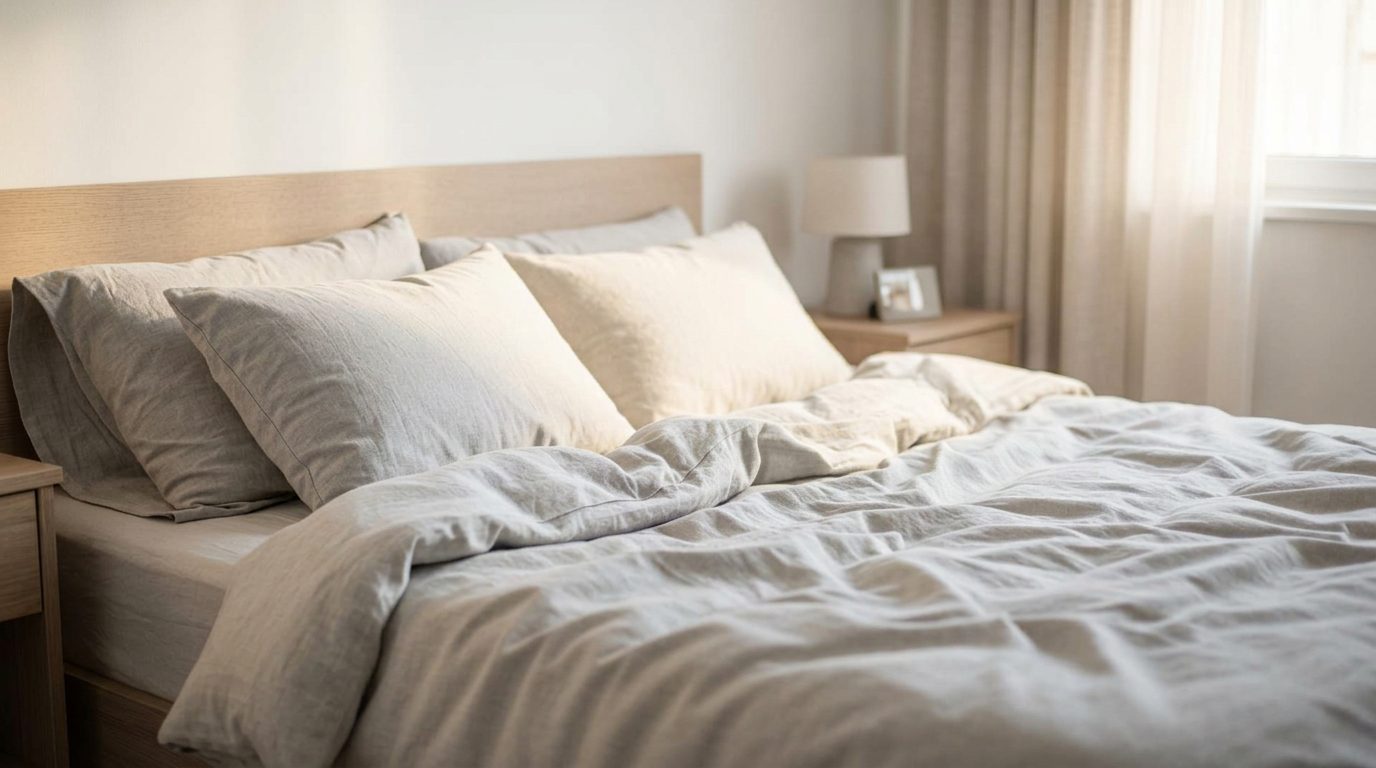
Sleep Science
Can't Sleep? Listen to a Physician.
13 science-backed tips for better sleep — from supplements to sleep gadgets.
The Backstory
A few years ago, sleep went from something I never thought about… to something I couldn't stop thinking about.
When my daughter was born, my sleep unraveled — like it does for most new parents. At first, I blamed the obvious: newborn wakeups, toddler regressions. But even after she started sleeping through the night, I didn't recover. That's when I had to admit something uncomfortable: it wasn't just parenthood. It was me.
In my 20s, I could sleep anywhere — deep, uninterrupted, eight-plus hours. Now I was getting "eight hours" and waking up groggy. I could fall asleep fine, but I regularly woke up throughout the night. Because of these middle-of-the-night interruptions, I never felt restored when I woke up.
So I did what I always do with problems — I turned it into a project. I started working with my primary care physician and treated sleep like something I could optimize, not just hope would improve. And from that, I gleaned more than a dozen evidence-backed, physician-approved strategies for optimizing my sleep.
But here's what I've also learned: you don't have to change everything at once. Small, intentional upgrades compound quickly. I don't sleep like I did at 25. But I sleep far better than I did three years ago — and that didn't happen by accident. It happened by design.
13 Physician-Backed Tips for Better Sleep
Click any tip to expand and read more. Start with what feels most accessible.
Supplements
1Magnesium Glycinate for Better ZZZs
Magnesium is one of the most well-researched sleep supplements available, but the form you take matters. Magnesium Glycinate is the variant best suited for sleep — highly absorbable with a natural calming effect on the nervous system. Avoid Citrate, Oxide, or Malate, and take it an hour before bed and give it a few weeks before evaluating.
2Melatonin (The Right Dose, The Right Way)
Melatonin is widely misunderstood. Most people take too much and wonder why they wake up groggy. Start with 1mg taken 30 minutes before bed, increasing by 1mg at a time until you find your minimum effective dose. Equally important: cycle it — 30 days on, 30 days off — to prevent your body from down-regulating its own natural production.
Environment
3Put Up Blackout Curtains
Even small amounts of ambient light — street lights, early morning sun, a neighbor's porch light — can signal to your brain that it's time to wake up. Blackout curtains eliminate that variable entirely, creating the dark environment your body is wired to sleep in.
4Use a Sleep Mask
Not ready to invest in curtains or sleeping away from home? A quality sleep mask is a portable alternative that does the same job — and once you get used to wearing one, it's hard to sleep without it.
5Try a Cooling Pillow
As you fall asleep, your core temperature naturally drops — and a pillow that traps heat works against that process. A cooling pillow helps regulate temperature around your head and neck all night, making it easier to fall asleep and stay there.
6(Re)Consider Your Mattress
An uncomfortable mattress is one of the most overlooked sleep disruptors. If you're waking up stiff or never feeling fully rested, your mattress may be the culprit. The Saatva is a physician-favorite for its comfort, support, and durability — the kind of investment that pays off every single night.
7Explore Temperature-Controlled Sleep
For those who want to go further, the Eight Sleep Pod actively regulates the temperature of your mattress surface throughout the night. It's a premium investment, but for chronic poor sleepers, it can be transformative.
8Get Air-Purifying Houseplants
Certain houseplants — Aloe Vera, Snake Plants, and Peace Lilies — are effective at filtering indoor air toxins and increasing oxygen levels overnight. Cleaner air means easier breathing, and easier breathing means deeper sleep. Low-maintenance, inexpensive, and genuinely impactful.
Habits & Behaviors
9Reduce Blue Light Before Bed
Screens aren't as villainous as their reputation suggests, but there is solid evidence that evening blue light can suppress melatonin production. Reduce screen time in the hour before bed, or use blue-light-blocking glasses if that's not realistic.
10Cut Alcohol (and What to Drink Instead)
Alcohol may help you fall asleep faster, but it fragments your sleep cycles and suppresses REM sleep — meaning you wake up unrested regardless of how many hours you logged. If you're going to drink, limit it to one drink before 6pm. Better yet, try an alcohol alternative like Brez for the wind-down feeling without the sleep disruption.
11Build a Sleep Schedule with a Tracker App
Consistency is the single most important factor in long-term sleep quality. Going to bed and waking up at the same time every day — even on the weekends — reinforces your circadian rhythm. A sleep tracker app helps by monitoring your patterns and sending reminders to keep you on schedule.
Gear & Gadgets
12Use a Wearable Sleep Tracker
A sleep tracker app is only as good as the data feeding into it. Most fitness trackers today, like the Amazfit Active 2 Premium, have a sleep tracking capability that integrates seamlessly with most dedicated sleep apps, automatically logging your sleep stages, heart rate, and restlessness overnight. Over time, that data reveals patterns you'd never notice on your own.
13Try (Comfortable) In-Ear Audio
Some people simply can't fall asleep in silence. Audio is a legitimate sleep aid — the only problem is that standard earbuds are uncomfortable to sleep in. The Ozlo Sleepbuds® are specifically designed for side sleepers and overnight wear, with a low-profile shape that stays comfortable no matter how you toss and turn. If sound is part of your wind-down routine, these are a game-changer.
Where to Start: Building Your Sleep Stack
Thirteen tips can feel overwhelming, so here's the honest advice: you don't need all of them. Start with the free stuff — cut the nightcap, set a consistent bedtime, and let some air-purifying plants do their quiet work. Then, layer in the low-cost additions and, when you're ready, consider the bigger investments. The goal isn't perfection — it's progress. And better sleep is closer than you think.